

For the embroidered shirt vs kurta decision, choose a shirt when its cut and your existing bottoms meet the invitation; choose a kurta when its actual cut gives your preferred coverage, or a set for coordinated pieces. Our Blue Modal Silk Zardosi Work Shirt costs ₹9,450 inclusive of taxes.
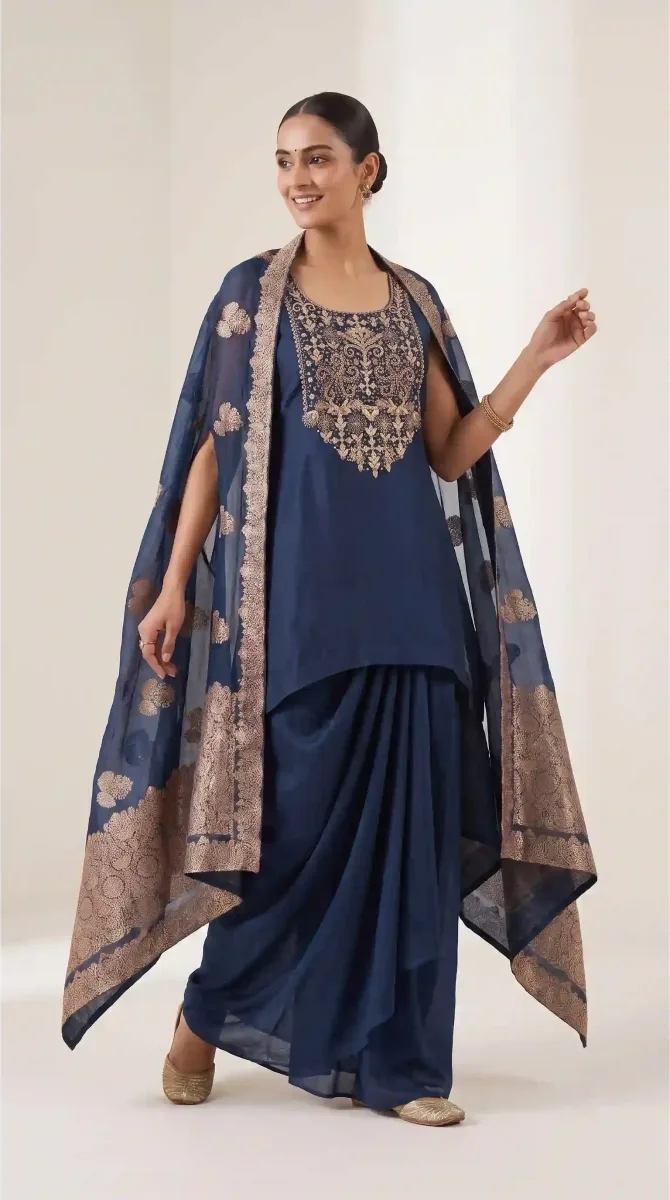
Our AANVIKA Navy Blue costs ₹9,750 inclusive of taxes. AANVIKA includes a kurta, draped skirt and cape: these purchases solve different wardrobe needs.
Compare three buying choices: an embroidered shirt alone, a kurta alone and coordinated occasionwear sets.
Embroidered shirt vs kurta: three purchases at a glance
A shirt or kurta bought on its own requires outfit coordination; a kurta set supplies the components explicitly listed. A kurta is the upper tunic in a salwar-kameez outfit, as defined in the International Journal of Costume and Fashion. Trousers and a dupatta are not automatically included.
| Buying consideration | Embroidered shirt alone | Kurta alone | Coordinated kurta set |
|---|---|---|---|
| Front and back hems | Compare both with your bottom | Compare both, including side openings | Assess kurta hem with included bottom |
| Coverage | Depends on cut and layers | Depends on cut and openings | Depends on every component |
| Neckline | Assess actual depth, width and fastening | Assess actual depth, width and fastening | Assess kurta and outer layer in turn |
| Sleeves | Check length and arm room | Check length and arm room | Check sleeves beneath any outer layer |
| Opacity | Assess fabric and lining | Assess fabric and lining | Assess each layer’s transparency |
| Components included | Shirt in a shirt-alone purchase | Upper garment in a kurta-alone purchase | Only the listed combination |
| Coordination effort | Choose bottoms and accessories | Choose bottoms and any additional layer | Planned combination; accessories still needed |
| Repeat-wear possibilities | With compatible wardrobe bottoms | With compatible bottoms and layers | Together or mixed with wardrobe pieces |
These are three concrete purchases from our collection. AANVIKA pairs its kurta with a draped skirt and sheer cape.
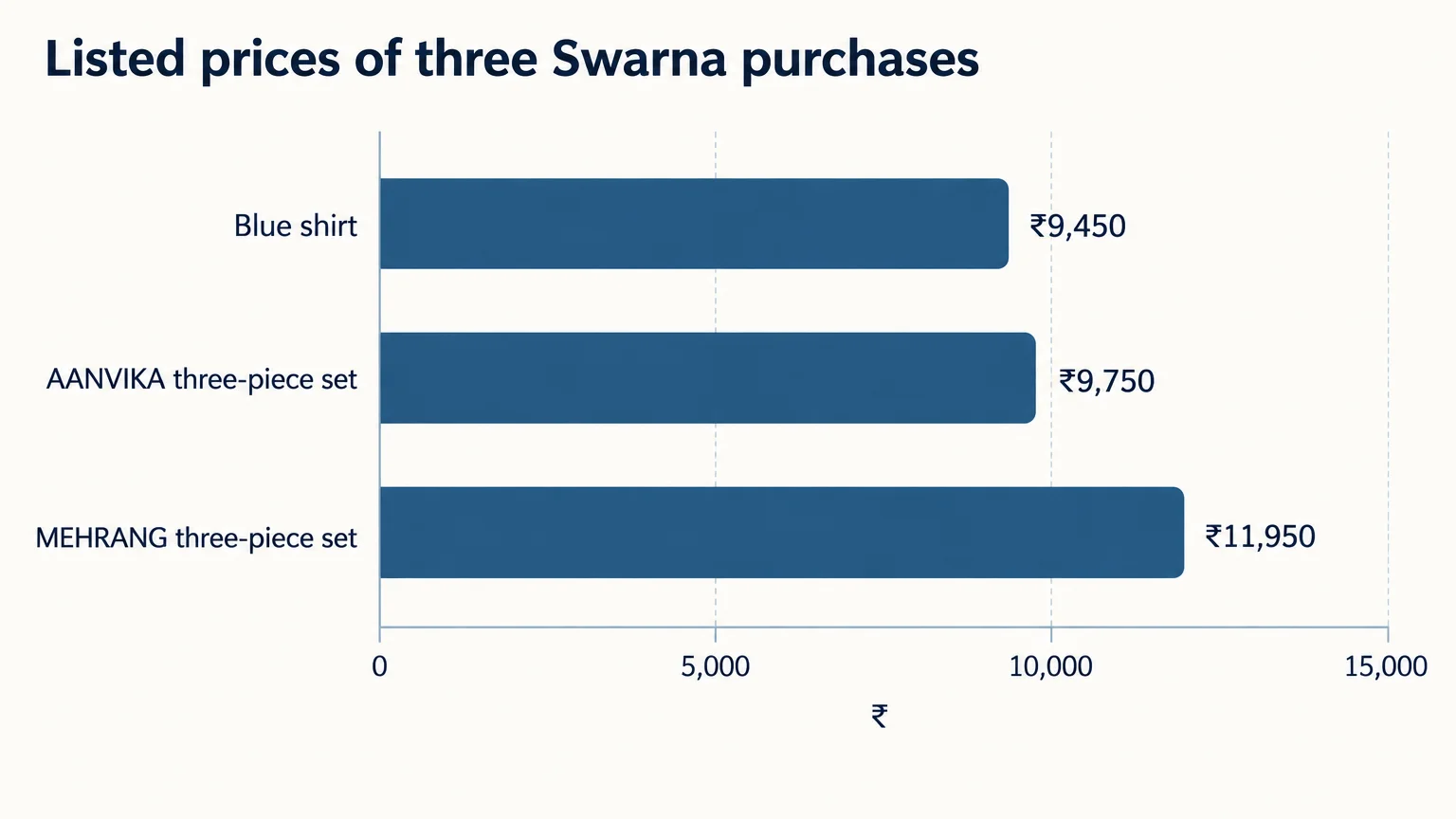
| Purchase | Listed garment or components | Price, including taxes |
|---|---|---|
| Blue Modal Silk Zardosi Work Shirt | Modal silk shirt with Zardosi hand embroidery | ₹9,450 |
| AANVIKA Navy Blue | Maheshwari silk kurta, crepe silk draped skirt, sheer Banarasi organza cape | ₹9,750 |
| Our MEHRANG Black Bandhani set | Kurta, farshi salwar, organza dupatta | ₹11,950 |
Example: comparing the two listed prices
Assume you are choosing between the Blue shirt at ₹9,450 and the AANVIKA outfit at ₹9,750. ₹9,750 minus ₹9,450 = ₹300. The shirt costs ₹300 less before any additional outfit purchases. The ₹300 gap is specific to these two designs; compare your full outfit budget before choosing.
Which gives more coverage: an embroidered shirt or a kurta?
A kurta gives more coverage only when its actual cut covers more of the areas you want covered than the shirt. Kurtas themselves range from upper-thigh to well below the knee, according to Wikipedia’s kurta overview.
Use this six-point checklist for any shortlisted garment, with the bottoms and layers you intend to wear.
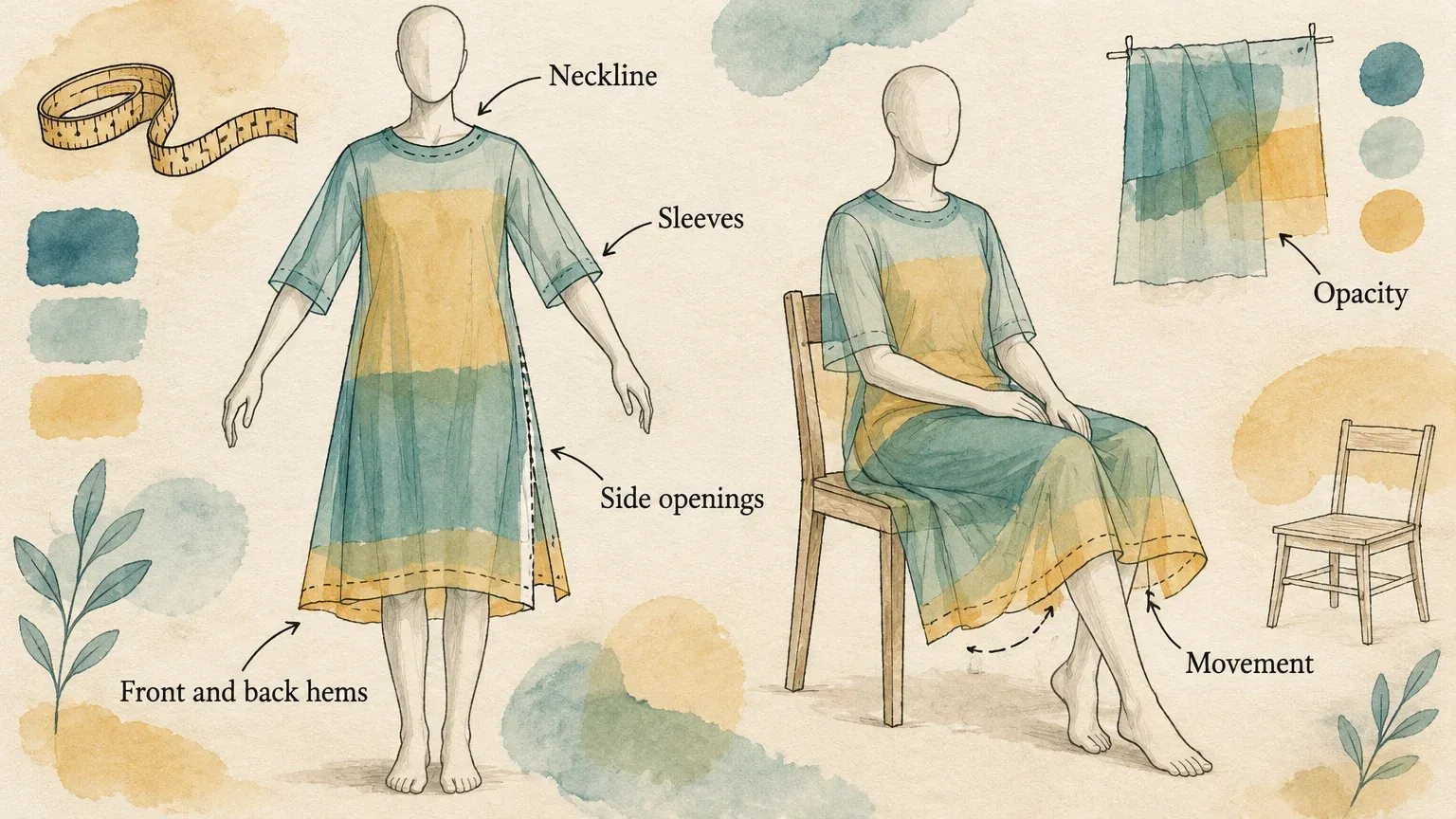
- Front and back hems: compare both while standing and sitting.
- Side openings: assess where they begin and whether your bottoms provide the coverage you want when walking.
- Neckline and fastening: compare depth, width and any openings. Do not assume every shirt has a collar or every kurta has the same neckline.
- Sleeves: consider length and room to reach, bend your elbows and wear an outer layer comfortably.
- Opacity: assess the bodice, sleeves, lining and outer layer in turn. A sheer cape allows the layer beneath to remain visible.
- Movement and sitting: check walking, reaching and bending, plus contact between raised embroidery, skin, waistbands and chair backs.
Comfort also depends on fabric weight, drape and lining, not simply length. Layering can help with coverage, but should not leave you restricted through the shoulders. Share your coverage priorities during a fit consultation before committing to a silhouette.
Embroidered silk shirt vs kurta: which works better for an office Diwali party?
For an office Diwali party, choose an embroidered silk shirt when festive separates are permitted and suitable work trousers complete the outfit. Choose a kurta when its actual cut better meets the office dress code and your coverage preferences. Assess embellishment, opacity and comfort for the working day.
An embroidered shirt can meet an Indian festive dress code when Indo-Western dressing is welcomed. Designer Shweta Kapur recommends an eclectic mix for Diwali in Vogue India’s Diwali guide, but your invitation remains the deciding factor.
| Invitation wording | Embroidery intensity | Shirt route | Kurta route | Final coverage check |
|---|---|---|---|---|
| Office festive or smart festive | Restrained focal detail | Plain tailored trousers | Neutral straight trousers | Neckline, opacity and seated comfort |
| Relaxed family celebration | Light or moderate detail | Existing festive skirt or trousers | Straight trousers or palazzos | Hems and openings during movement |
| Dressed-up evening, Indo-Western welcome | More prominent detail if desired | Festive skirt and considered accessories | Coordinated kurta, draped skirt and cape | Coverage across all layers |
| Traditional Indian attire required | Match the function’s formality | Use only if the host accepts separates | Suitable traditional outfit | Cut, coverage and any required layer |
Vogue India’s workwear advice pairs a statement kurta with neutral trousers and one piece of jewellery. Apply that restrained approach to an embroidered shirt too.
- Office colours: navy, ivory, charcoal and deep green simplify pairing. Maroon, mustard or teal can add festive colour where permitted.
- Keep one focal point: let embroidery lead rather than competing with several embellished accessories.
- Avoid policy conflicts: high shine, extensive embellishment, distressed denim or low necklines may be unsuitable for your workplace.
For weddings, follow an explicit traditional-attire requirement, as Vogue’s wedding guest guide advises. Ask the host if the wording leaves festive separates unclear.
Coordination, repeat wear and ordering to your measurements
Check what completes the outfit
If you already own suitable trousers or a festive skirt, an embroidered shirt can complete the outfit without sourcing coordinated bottoms. A kurta alone can do the same when its cut works with those items. Choose a set when its included components genuinely remove missing purchases.
Before buying, make a short wardrobe inventory:
- Shirt or kurta alone: name the bottom, shoes, accessories and any coverage layer you will wear.
- Coordinated set: identify a realistic future pairing for the kurta, skirt or other included pieces.
- Missing items: add their cost and shopping effort to your decision.
Buying one garment offers flexibility but requires matching effort. A set reduces initial coordination, but may introduce components you rarely use. Repeat wear depends on compatible pieces and future invitations. A jacket can be worn over a slip dress, sari or tailored trousers, as Vogue India’s capsule guide recommends.
Confirm fit and timing before ordering
We offer XS–6XL and Custom Measurement for both the Blue shirt and AANVIKA, with complimentary WhatsApp fit consultation and alteration support. Both products are made to order in 4–5 weeks. Confirm event delivery before purchasing: production timing is not a guaranteed arrival date.
Handcraft matters alongside silhouette. Our Blue shirt features Zardosi hand embroidery by Shambu Adhikary in Bhopal and 43–48 artisan hours. Choosing a shirt need not mean leaving Indian craftsmanship behind.
Both featured products specify dry cleaning. Keep raised embroidery away from rough bag straps and snagging jewellery, and discuss alterations before cutting through worked areas. For embroidery and fit selection, use our Zardosi shirt buying guide.
Choose a shirt if / choose a kurta if
Choose the purchase that satisfies the invitation, your coverage preferences and the wardrobe you already own.
| Invitation | Coverage requirement | Suitable items owned | Best purchase route |
|---|---|---|---|
| Festive separates permitted | Shirt’s actual cut meets your needs | Trousers or festive skirt | Embroidered shirt |
| Kurta outfit appropriate | Kurta’s actual cut meets your needs | Compatible bottom and layers | Kurta alone |
| Coordinated festive outfit wanted | Included pieces meet your needs | Matching components missing | Coordinated kurta set |
| Requirements remain unmet | Required coverage not provided | Current pairings unsuitable | Neither featured design |
Choose a shirt if permitted separates and existing bottoms solve the outfit. Choose a kurta if its coverage suits you; choose a set if its listed components complete the outfit. Rule out any option that cannot meet your confirmed event date.
If coordination is the missing piece, explore our occasionwear sets for a combination you can comfortably wear to the invitation.