

Your wedding outfit checklist needs one complete look per function: clothing, jewellery, shoes, bag, underlayers and a fitting checkpoint. Reuse pieces wherever possible. For our made-to-order clothing, allow 4–5 weeks before dispatch, with transit, fitting and any adjustments additional, under our production policy. Vogue India recommends a wedding guest capsule wardrobe rather than buying something for every haldi, mehendi, cocktail and reception. Whether you are a guest, sister of the bride or groom, or the bride herself, plan the complete look before paying.
Start your wedding outfit checklist with dates and functions
1. Fix your first wear date and wardrobe-ready deadline
Your wardrobe must be ready before your earliest function or departure date, whichever comes first. Record both, then set an earlier wardrobe-ready deadline for your final full-look check.
Print this page or save it as a PDF. Fill in the worksheet as you go, recording components, accessories, costs, fitting dates and whether to proceed with a purchase or pause.
If your wardrobe audit reveals a genuine gap, our Indian wedding guest outfits include made-to-measure jumpsuits, sets and separates.
2. Tick only the functions you will attend
List only the events on your invitations, then match each look to its missing pieces, budget and fitting needs.
| Function | Invitation details | Clothing audit | Accessories | Decision and readiness |
|---|---|---|---|---|
| ☐ Engagement | Record date, role, dress code | List owned and missing garments | Assign jewellery, shoes, bag, underlayers, hair accessories | Record purchase choice, budget, fitting status |
| ☐ Mehendi | Record date, role, dress code | List owned and missing garments | Assign jewellery, shoes, bag, underlayers, hair accessories | Record purchase choice, budget, fitting status |
| ☐ Haldi | Record date, role, host instructions | List owned and missing garments | Assign jewellery, shoes, bag, underlayers, hair accessories | Record purchase choice, budget, fitting status |
| ☐ Sangeet or cocktail | Record date, role, dress code | List owned and missing garments | Assign jewellery, shoes, bag, underlayers, hair accessories | Record purchase choice, budget, fitting status |
| ☐ Wedding rituals | Record date, role, ceremony requirements | List owned and missing garments | Assign accessories and applicable ceremonial pieces | Record purchase choice, budget, fitting status |
| ☐ Reception | Record date, role, dress code | List owned and missing garments | Assign jewellery, shoes, bag, underlayers, hair accessories | Record purchase choice, budget, fitting status |
Add getting-ready clothing only if you need an outfit to change in or want a separate look for getting-ready photographs.
Match your role and dress code to a complete look
3. Record your role and the invitation’s dress code
As a guest, plan for the functions you will attend. As close family or the bride, also account for your duties and rituals.
| Your role | Wardrobe priority | Extra requirement |
|---|---|---|
| Guest | Meet the invitation’s dress code | Comfort for planned activities |
| Sister or close family | Balance dressing with hosting | Movement, long wear, family photographs |
| Bride: bridal branch | Follow ceremony clothing requirements | Required changes and ceremonial accessories |
Note the time of day, venue, requested colours and coverage. Emily Post’s attire guidance starts with the invitation and time of day; Vogue’s Indian wedding guide also advises clarifying regional formality expectations.
- Festive: start with a dressy kurta set, co-ord or saree.
- Traditional: consider a saree, lehenga or occasion-appropriate Indian ensemble.
- Cocktail: consider a gown or draped skirt-and-blazer look.
- Formal: choose a polished complete ensemble and clarify ambiguous instructions with the hosts.
4. Build one complete look per function
Choose clothing that suits the function’s activities and is comfortable for the time you will spend wearing it.
- Engagement: a light lehenga or dressy kurta set; blush pink, lavender or sage can suit a pastel request.
- Mehendi: an easy-moving kurta and trousers or an Ajrakh co-ord.
- Haldi: an owned, washable outfit suited to the hosts’ plans and possible staining.
- Sangeet or cocktail: a lehenga or draped skirt-and-blazer pairing.
- Wedding rituals: a saree or lehenga appropriate to your role.
- Reception: a saree, dressy set or gown, according to the invitation.
Handcrafted denim suits a relaxed invitation. For traditional or formal requests, choose an ensemble that meets the dress code. In the bridal branch, add ceremonial clothing only for the rituals you will take part in.
Audit your wardrobe and check exactly what is included
5. Sort what you own before shopping
Sort each garment into one category: ready, needs fitting, needs a matching component, or unsuitable. “Ready” means it fits now and meets the invitation.
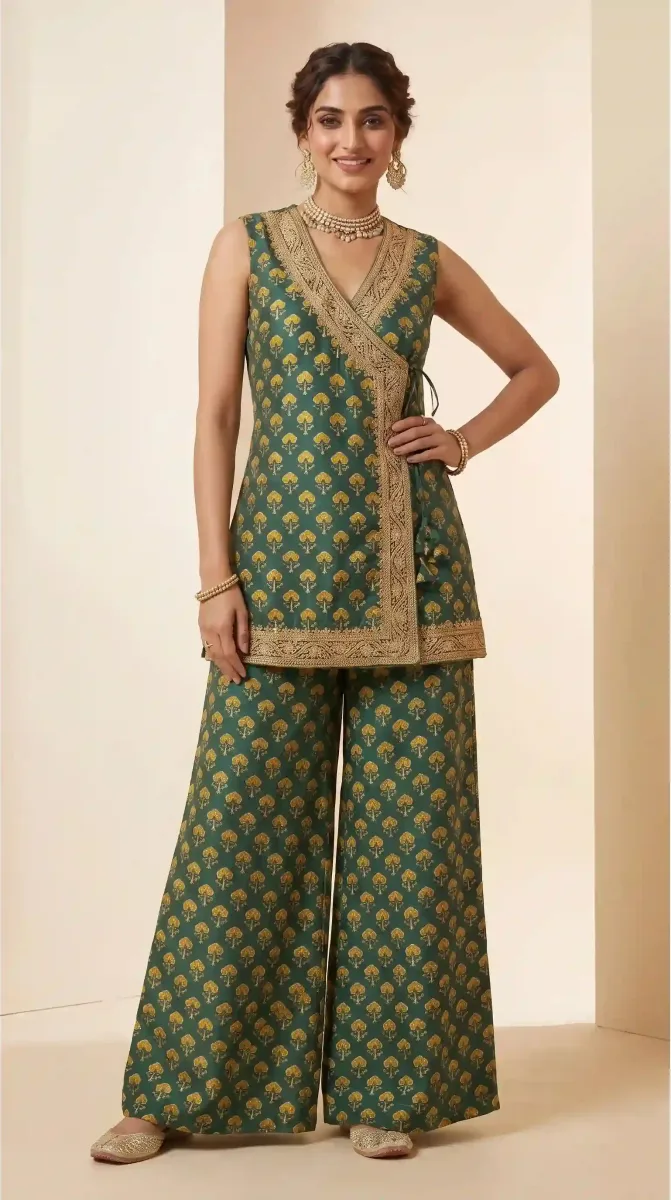
For example, your neutral wide-leg trousers could work with an embroidered top for mehendi, then a dressier top and jacket for cocktail. Reuse the earrings or clutch too.
6. Identify missing components before choosing a set
Compare the product’s stated contents with every component your look needs:
- Blouse or top, and skirt or trousers.
- Saree or drape, jacket and dupatta, where applicable.
- Lining and required underlayers.
Do not assume jewellery, shoes, a bag or an extra drape are included unless the product’s contents say so.
Our HEER Ajrakh co-ord set costs ₹14,500 and includes a sleeveless wrap-style tunic and wide-leg trousers in Ajrakh modal silk with hand zardosi. Artisan Shambu Adhikary contributes 66–73 artisan hours. Our authentic handicrafts in Indo-Western forms offer components you can pair with your existing wardrobe, keeping pieces you already love in use.
Assign accessories to each outfit
7. Allocate accessories and underlayers by function
Assign jewellery, shoes, a bag, underlayers and hair accessories to each look before buying. Vogue India’s jewellery guidance recommends pieces that solve more than one styling need.
| Look | Jewellery | Shoes | Bag | Underlayers and hair |
|---|---|---|---|---|
| Mehendi kurta set | Earrings | Comfortable flats | Hands-free bag | Suitable bra and lining; hair tie |
| Cocktail skirt and blazer | Neckline-compatible earrings | Secure dancing shoes | Clutch | Suitable support; secure clips |
| Wedding saree | Blouse-compatible jewellery | Shoes used to set hem | Clutch or potli | Fitted blouse, chosen underlayer; hair pins |
Bridal branch: add bangles, kaleeras, mathapatti, nath or a ceremonial dupatta only where applicable. Try them on together.
Price the complete look, then decide what to buy
8. Set a budget for the complete look
Budget for garments, missing accessories, delivery, applicable duties and fitting-related costs. Keep a contingency reserve beyond these costs.
Example: a ₹20,000 domestic allocation
Assume a ₹20,000 budget: set aside ₹14,500 for HEER, ₹2,500 for missing accessories, ₹1,500 for fitting-related costs and ₹1,500 for contingency.
| Category | Allocation |
|---|---|
| HEER garments | ₹14,500 |
| Missing accessories | ₹2,500 |
| Domestic delivery | Complimentary |
| Import duties for this domestic example | Not applicable |
| Fitting-related reserve | ₹1,500 |
| Contingency | ₹1,500 |
| Total | ₹20,000 |
Domestic shipping is complimentary; international shipping and applicable duties are additional.
9. Choose a complete set, one separate or no purchase
Buy only what fills a genuine gap in your wardrobe.
Example: choose a coordinated set
If you own suitable shoes, jewellery and a bag, but neither a top nor a bottom, a coordinated set can supply both missing garments in one purchase.
Example: buy one separate
If your trousers fit and your shoes and jewellery work, but you lack a dressy top, match one top to the trousers. Try them together before marking the look ready.
Example: make no new purchase
If your saree and blouse meet the invitation, complete the accessory pairing and movement checks. If they pass, the look is ready without new clothing.
Prepare for a real fitting
10. Prepare measurements and a movement-check plan
Make sure your measurements are current, decide who will help and record the garment-specific measurements requested. Prepare bust, waist, hip and relevant lengths; do not guess.
For our made-to-measure clothing, submit measurements through WhatsApp after ordering. We review them, flag unusual values before production and offer a complimentary WhatsApp video fit consultation, as explained in our measurement FAQ.
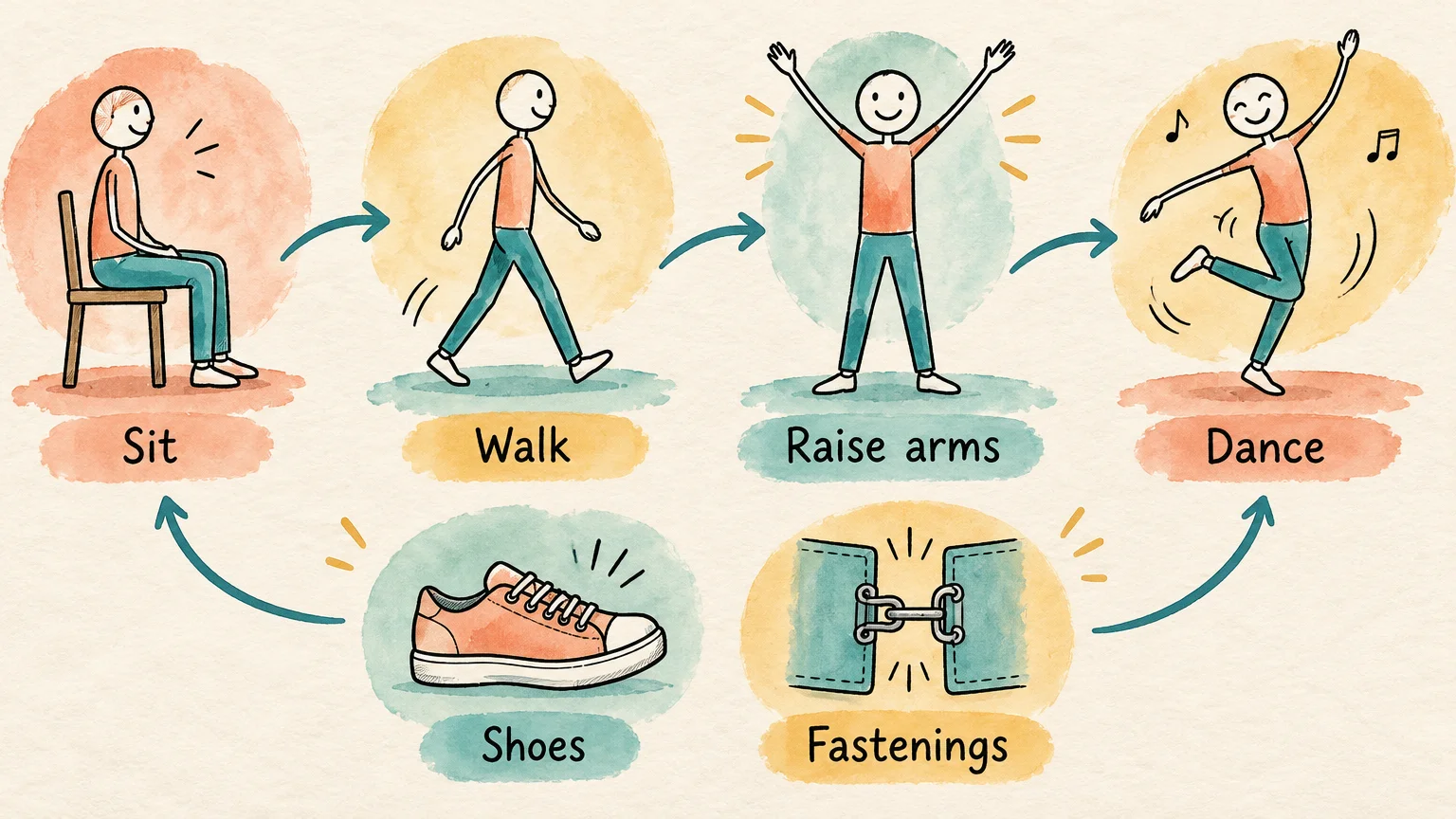
Try on the complete outfit with the shoes and underlayers you will wear:
- ☐ Sit, stand and walk without pulling or restriction.
- ☐ Raise your arms, stretch and try your dance movements.
- ☐ Check neckline security and sleeve movement.
- ☐ Check hem clearance and drape stability.
- ☐ Open and close every fastening; check support and visibility of underlayers.
Work backwards, then decide whether to proceed
11. Plan production, shipping and fitting time
Work backwards from your wardrobe-ready deadline, leaving time for production, transit, fitting and any adjustments. Dispatch is not arrival.
Begin your wardrobe audit and shopping comparisons early. Extensive bridal wardrobes need longer planning than a guest buying one missing piece.
We confirm event-date feasibility before purchase. Our made-to-order outfit guide explains the broader process.
Example: a 12 December 2026 first function
Assume we confirm 20 October 2026 as the production start, your first function is 12 December 2026 and you depart on 8 December 2026.
- At 4 weeks (28 days), estimated dispatch is 17 November.
- At 5 weeks (35 days), estimated dispatch is 24 November.
- Dispatch on 24 November leaves 18 days before the function for transit, fitting and adjustments.
- It leaves 14 days before your 8 December departure.
Plan around the earlier travel deadline, not the function date. Neither interval guarantees that your outfit will be ready.
Set receipt and fitting targets that leave room for adjustments, as below.
| Checkpoint | Target date |
|---|---|
| Receipt after transit | 28 November |
| Initial fitting with actual shoes and underlayers | 29 November |
| Adjustment allowance | 30 November–4 December |
| Final full-look checkpoint | 5 December |
| Wardrobe-ready deadline | 6 December |
12. Proceed only when the complete plan works
Before paying, make sure you have settled four things: required pieces, complete cost, measurement preparation and timing for your order.
If we record or apply measurements incorrectly, we provide a remake. For incorrect customer-supplied measurements, we assist with one complimentary alteration and coordinate the logistics. Allow time for a fitting and any follow-up work.
Pause if the outfit cannot be ready by your deadline. Use an owned look or a ready-to-wear alternative with confirmed availability and delivery instead. Include luggage contents and garment transport in your packing list.
Review your worksheet before committing to a purchase. If a new piece genuinely earns its place, explore our handcrafted occasionwear.